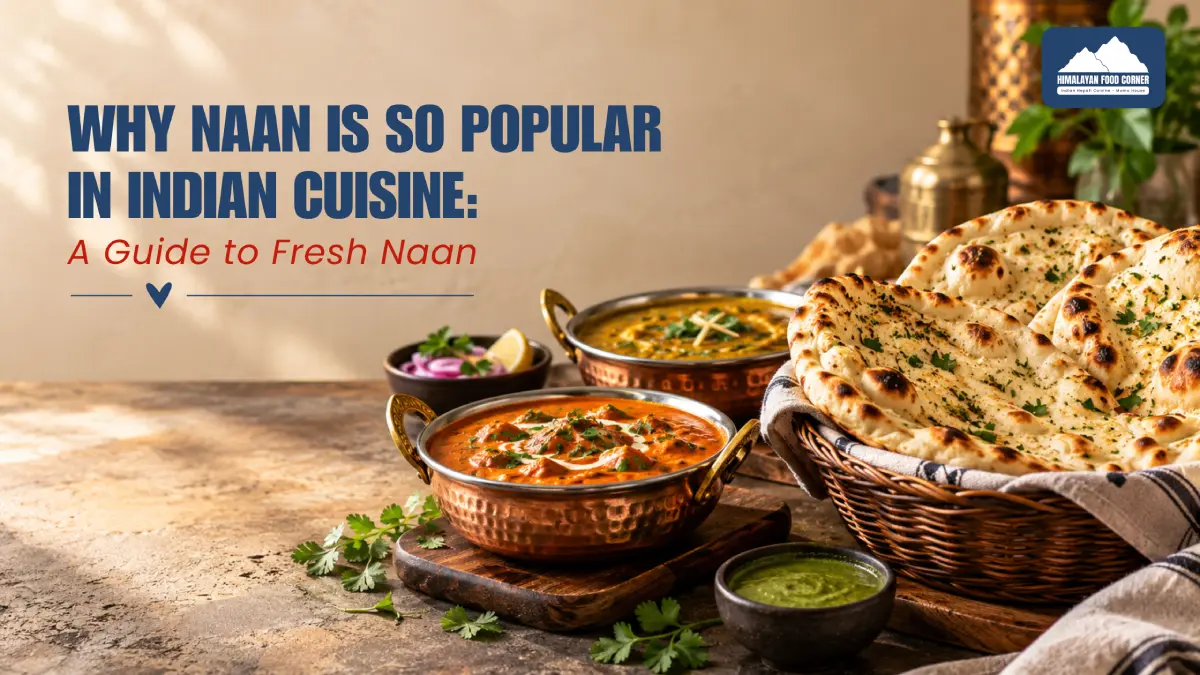
There is a simple reason naan rarely stays on the side of the plate for long. A piece of warm naan can pick up a thick curry, soak up its spices, and still have enough texture to make every bit interesting. Fresh from the hot tandoor, it can be soft in the middle, lightly crisp around the edges, and marked with small browned spots from the intense heat.
This combination makes naan much more than a side dish. It has become one of the most familiar types of traditional Indian naan and a favorite way to enjoy curries, dal, paneer and other dishes.
But what exactly makes naan different from other Indian breads? Where did it come from, how is it traditionally cooked, and why is naan so popular in Indian cuisine? Let's take a closer look.
Naan is a soft, leavened flatbread traditionally associated with the cuisines of South and Central Asia. It is generally made with wheat flour and may include yogurt, milk, yeast, oil, butter, or other ingredients depending on the recipe.
The dough is divided into portions and stretched or shaped by hand. Traditional naan is then cooked at very high heat inside a clay oven called a tandoor.
This gives naan its familiar combination of a soft, slightly chewy center and a browned, blistered surface. Naan can be served plain or finished with ingredients such as butter, garlic, herbs, cheese, chillies, nuts, or dried fruit.
This range of flavors is one reason traditional Indian naan works so well with different styles of naan and Indian food. can be part of so many different meals.
The history of naan is connected to several food traditions across Central and South Asia rather than one single place. The word itself comes from the Persian word “nān”, meaning “bread”.
Naan later became closely associated with food traditions across the Indian subcontinent, particularly in North Indian cuisine. Over time, different regions and kitchens developed their own versions, with variations in ingredients, fillings, toppings, and cooking methods.
So, while naan is strongly associated with Indian cuisine today, its history extends beyond any single country or region. Its popularity is part of a much longer exchange of food traditions across the region.
A traditional naan is baked by slapping the leavened dough directly onto the scorching-hot inner walls of a vertical clay oven called a tandoor. The combination of intense heat and direct contact with the oven's hot surface is a major part of what gives naan its characteristic appearance and texture.
The process generally looks like this:
The high heat matters because naan cooks much faster than bread baked at a lower temperature. The outside develops color and char while enough moisture remains inside to keep the bread soft.
Naan can also be cooked on a stovetop or in a conventional oven. However, those methods do not replicate the exact conditions of a traditional tandoor.
There is no single recipe for naan. Ingredients can vary depending on the region, recipe, and type of naan being prepared.
Common ingredients include:
Toppings and fillings can completely change the flavor. Garlic, butter, cheese, chillies, nuts, and dried fruit are just some of the ingredients used in different varieties.
Enjoy warm naan with curries, dal, paneer, and other Indian favorites for a meal built around fresh flavors and classic combinations.
Naan has stayed popular because it brings useful qualities together in one simple bread. It is soft enough to tear easily, sturdy enough to hold curry, and mild enough to work with strongly flavored dishes.
Fresh naan has a texture that is different from many other Indian breads. The inside can be soft and slightly chewy, while the outside develops a light crust and browned spots during cooking.
That contrast is part of what makes a freshly cooked naan so enjoyable. It also makes the bread practical for eating with thicker sauces and gravies.
The high heat of a tandoor does more than cook the dough quickly. The intense heat of the tandoor quickly cooks the outside, creating browned patches and small blisters. At the same time, moisture inside the dough helps keep the center soft and flexible.
That gives naan a texture that is difficult to reproduce with a packaged flatbread that has been sitting for hours.
One of the best things about naan is how easily it fits into a full meal. You can tear off a piece and use it to scoop up:
This is one reason naan and Indian food are so closely associated. The bread does not have to compete with the main dish. Instead, it helps carry its flavors.
Plain naan is only the starting point. Butter, garlic, cheese, chillies, nuts, dried fruit, and other ingredients can be added to create very different versions of the same basic bread.
That gives diners plenty of choices without changing the basic role naan plays at the table.
There are wide varieties of naan, and restaurants may have their own versions. Some are simple and savory, while others are richer or filled with sweet and savory ingredients. The biggest differences usually come from the toppings, fillings, and finishing ingredients.
Plain naan is the simplest version. It has a mild flavor that allows the accompanying curry or other dish to stand out. It is a good choice when the meal already has several strong flavors.
Butter naan is finished with butter or ghee after cooking. This adds richness and gives the surface a softer, more savory finish. It works particularly well with creamy curries and dishes with rich sauces.
Garlic naan is topped with garlic before or during cooking and may be finished with butter or herbs. The garlic adds a stronger savory flavor than plain naan, making it a popular choice for people who want the bread itself to add more character to the meal.
Garlic cheese naan combines two popular flavors with soft naan. The cheese makes it richer and more filling, while garlic adds a savory edge. It can be especially appealing when you want the bread to play a bigger role in the meal.
Some naan varieties are filled or topped with additional ingredients. Peshawari naan, for example, is known for its sweet fillings, which can include nuts and dried fruit. Other stuffed naan can include potato, cheese, or other savory fillings.
The exact selection depends on the restaurant. In Richardson, menus can range from simple plain naan to more heavily flavored options, making Indian bread in Richardson a useful starting point when exploring different styles.
Naan and roti are both popular Indian breads, but they are not the same. Their dough and cooking methods are generally quite different.
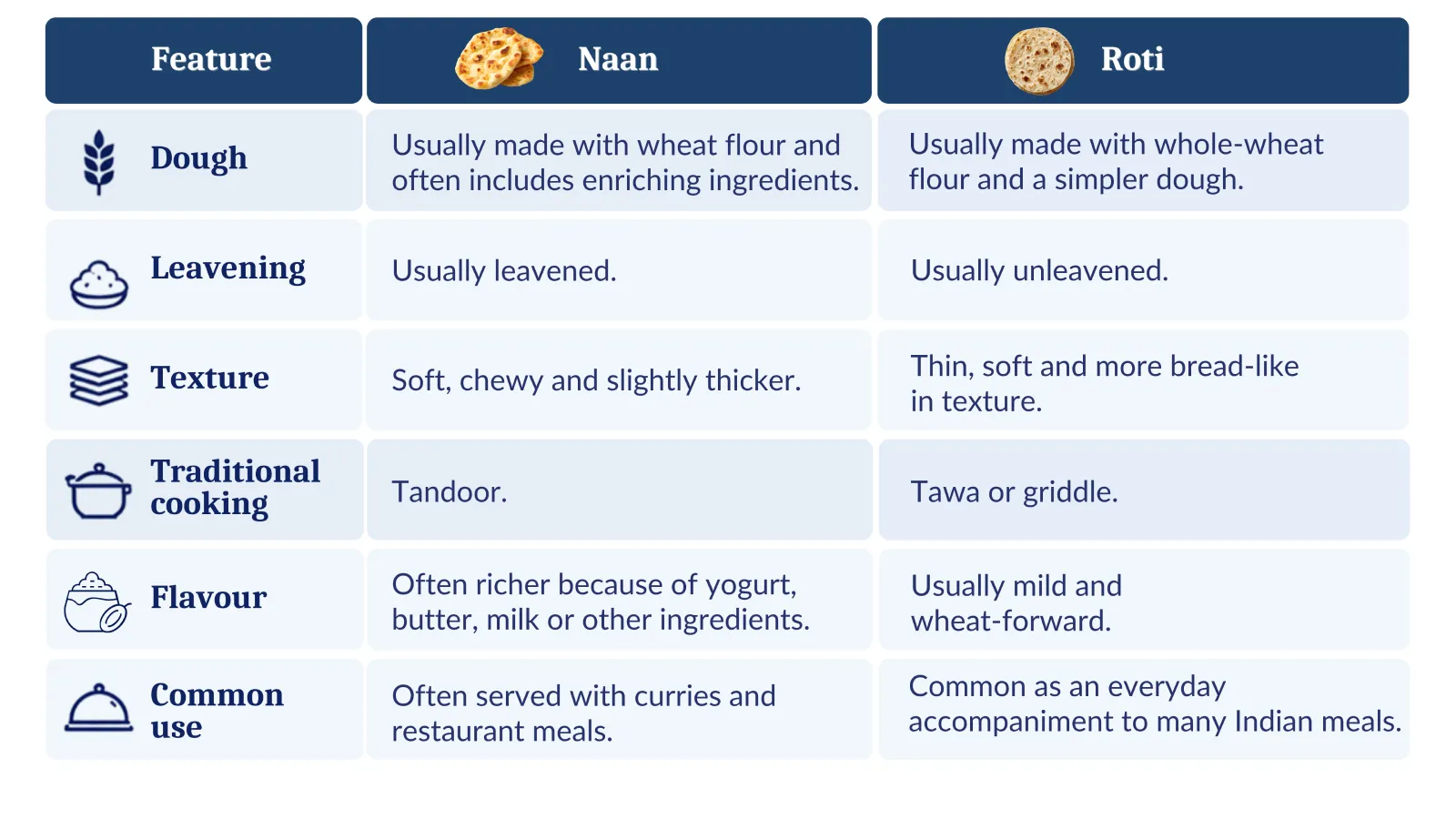
These are general differences rather than strict rules. Recipes and cooking methods can vary between regions and households. The easiest way to think about it is that naan is usually richer and more substantial, while roti tends to be simpler and lighter.
Naan is flexible enough to work with many different Indian dishes. The best pairing often depends on how strong, rich, spicy, or creamy the main dish is.
Soft naan works particularly well with creamy dishes such as butter chicken, paneer-based curries, and dal makhani. Its texture helps pick up the thicker sauce without breaking apart easily.
Naan can also balance stronger spices in dishes such as chicken curry, lamb preparations, and goat curry. The mild bread gives you something simple between bites of a more heavily seasoned curry.
You do not need meat or a rich sauce to enjoy naan. Dal, chana masala, saag, paneer dishes, and vegetable curries all pair naturally with warm bread.
Naan can also be served alongside rice, curries, vegetables, chutneys, and other sides. This creates a meal with different textures and flavors rather than relying on a single dish.
If you're exploring authentic Indian food in Richardson, trying naan with more than one type of curry is a simple way to experience how the bread changes with different flavors.
Savor authentic Indian and Himalayan flavors made to bring people together.
With so many choices, the best naan often comes down to how you want your meal to taste.
There is no single “best” naan. The right choice depends on the curry, your taste preferences, and how much flavor you want from the bread itself.
Fresh naan is easy to enjoy as part of a restaurant meal in Richardson, especially when it comes straight from a tandoor and arrives warm at the table.
A good Indian meal does not have to be complicated. A curry, a few pieces of naan, and perhaps a vegetable or rice dish can be enough to create a satisfying meal with different flavors and textures.
For anyone exploring Indian food in Richardson, trying a freshly cooked naan alongside a few different dishes is a simple way to get familiar with the cuisine. Himalayan Corner, for example, serves freshly baked naan from the tandoor alongside Indian and Himalayan dishes in Richardson.
The menu includes options such as plain, butter, garlic, garlic cheese, and chilli naan, giving diners several ways to enjoy this familiar Indian bread.